
Hi, I'm Zifeng (Lauren) Liu.

A
Self-driven, quick starter, and enthusiastic researcher with a strong passion for leveraging AI and data mining to improve educational outcomes.

About

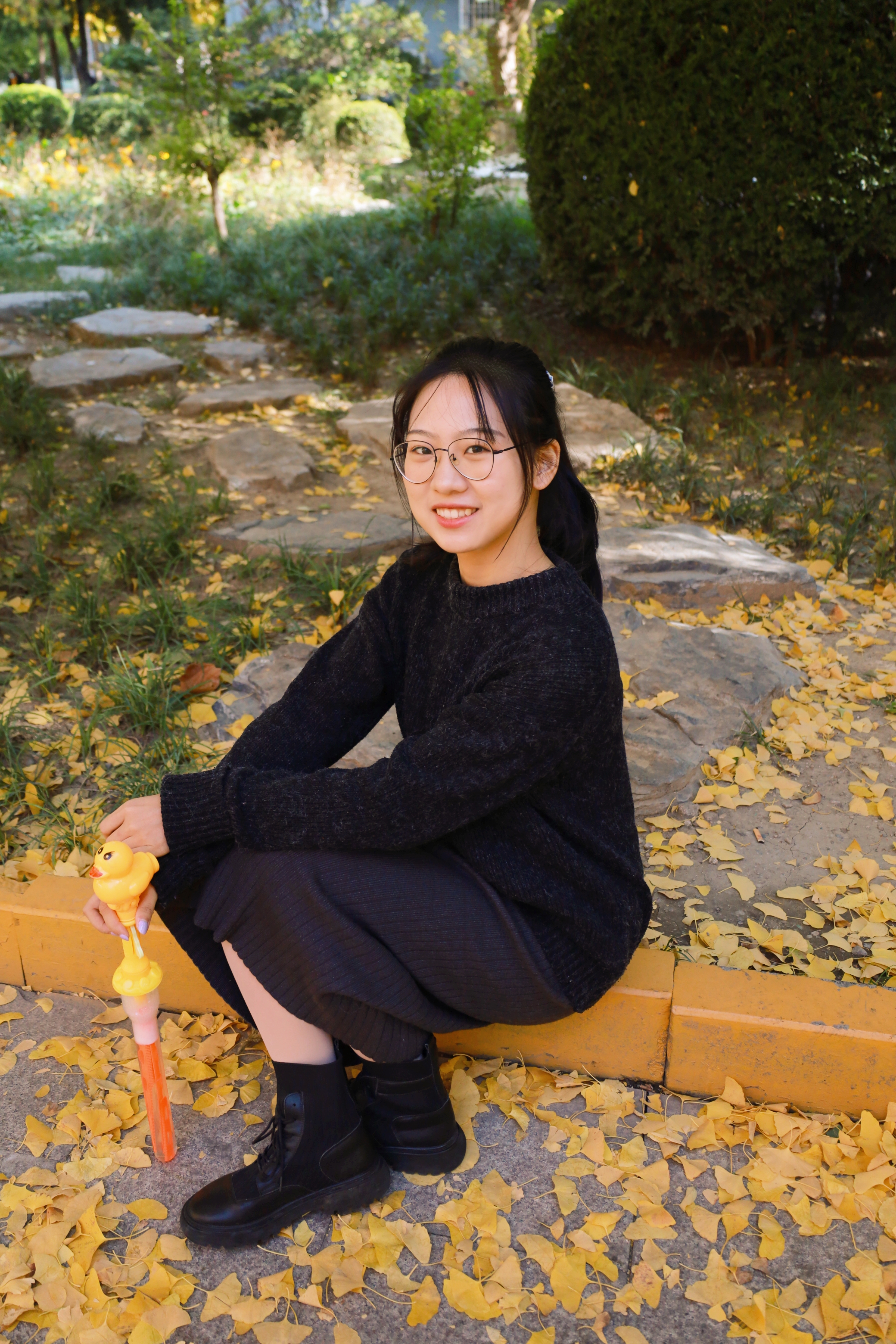
Profile Image

I am currently a Ph.D. candidate (third-year) in Educational Technology at the College of Education, University of Florida. I hold a Master's degree in Computer Software and Theories from Beijing Normal University and a Bachelor's degree in Computer Science from Beijing Technology and Business University. My research interests lie at the intersection of educational data mining, learning analytics, and the application of artificial intelligence in education, with a particular focus on computer science education.

I am looking for collaborative opportunities to work on innovative projects, engage in meaningful research, and foster professional growth and knowledge exchange. In my free time, I enjoy traveling, listening to music, hiking, and, of course, catching up on some well-deserved sleep.

Projects

Screenshot of web app
AI4VS

AI Across the Curriculum for Virtual Schools.

Accomplishments
  • To be updated.
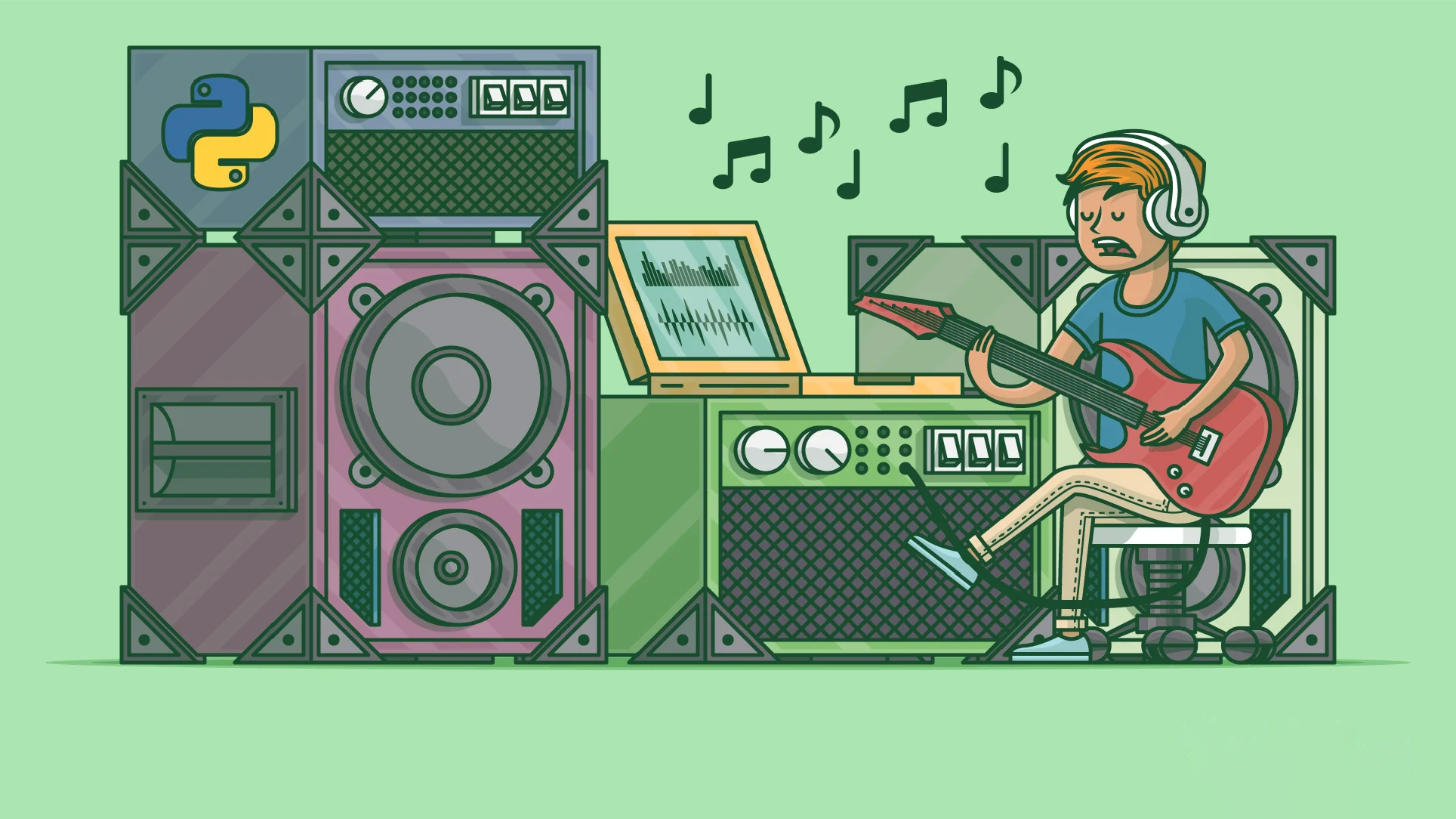
music streaming app
M-flow

A flow-based programming platform designed for elementary students.

Accomplishments
  • Zifeng Liu, Shan Zhang, Maya Israel, Robert Smith, Wanli Xing, and Victor Minces*. 2025. Engaging K-12 Students with Flow-Based Music Program- ming: An Experience Report on Its Impact on Teaching and Learning. In Proceedings of the 56th ACM Technical Symposium on Computer Science Edu- cation V. 1 (SIGCSE TS 2025), February 26-March 1, 2025, Pittsburgh, PA, USA. ACM, New York, NY, USA, 7 pages. https://doi.org/10.1145/3641554.3701902
Screenshot of web app
LogicDS

An integrated data science foundations course built on mathematical logic.

Accomplishments
  • Liu, Z., Monteith, B., Chao, J., & others. (2024, August 30). Using entropy analysis to explore student engagement in an online high school data science course. TechRxiv. https://doi.org/10.36227/techrxiv.172503593.33731605/v1
Screenshot of  web app
AI Fairness

A project dedicated to ensuring equitable and unbiased outcomes in online learning systems.

Accomplishments
  • Liu, Z., Jiao, X., Li, C., & Xing, W. (2024, July). Fair Prediction of Students' Summative Performance Changes Using Online Learning Behavior Data. Proceedings of the 17th International Conference on Educational Data Mining, 686--691. https://doi.org/10.5281/zenodo.12729918
  • Liu, Z., Xing, W., & Li, C. (2024, July). Explainable analysis of AI-generated responses in online learning discussions. In Educational Data Mining 2024 Workshop: Leveraging Large Language Models for Next-Generation Educational Technologies. https://doi.org/10.13140/RG.2.2.24309.38881
Screenshot of  web app
Generative AI in Education

A project applying Generative AI to support online K-12 STEAM education.

Accomplishments
  • Zifeng Liu, Xinyue Jiao, Wanli Xing, and Wangda Zhu. 2025. Detecting AI-Generated Pseudocode in High School Online Pro- gramming Courses Using an Explainable Approach. In Proceedings of the 56th ACM Technical Symposium on Computer Science Education V. 1 (SIGCSE TS 2025), February 26-March 1, 2025, Pittsburgh, PA, USA. ACM, New York, NY, USA, 7 pages. https://doi.org/10.1145/3641554.3701942.
  • Song, Y., Kim, J., Liu, Z., Li, C., & Xing, W. (2024). Students' Perceived Roles, Opportunities, and Challenges of a Generative AI-powered Teachable Agent: A Case of Middle School Math Class. arXiv preprint arXiv:2409.06721.
Screenshot of  web app
eSPAC3

A Minecraft learning environment for upper-elementary students to strengthen spatial computational thinking skills.

Accomplishments
  • To be updated.

Publication

Journal Papers

  • Liu, Z., Xing, W., Jiang, Y., Li, C., Kim, T., & Li, H. (2025). Leveraging contrastive learning to improve group and individual fairness in predictive analytics for online learning. Journal of Computing in Higher Education. https://doi.org/10.1007/s12528-025-09468-y
  • Liu, Z., Xing, W., Jiao, X., & Li, C. (2025). Exploring fairness and explainability in LLM-generated support for online learning discussion forums. Journal of Learning Analytics, 1–26. https://doi.org/10.18608/jla.2025.8885
  • Liu, Z., Xing, W., Li, C., Zhang, F., Li, H., & Minces, V. (2025). Exploring automated assessment of primary students’ creativity in a flow-based music programming environment. Journal of Learning Analytics, 12(2), 83–104. https://doi.org/10.18608/jla.2025.8835
  • Liu, Z., Xing, W., Jiao, X., & Li, C. (2025). What are the differences between student and ChatGPT-generated pseudocode? Detecting AI-generated pseudocode in high school programming using explainable machine learning. Education and Information Technologies. https://doi.org/10.1007/s10639-025-13385-z
  • Liu, Z., Xing, W., Ngo, B., Jiao, X., et al. (2025). Engagement patterns of middle school students with AI teachable agents in mathematics learning. Scientific Reports, 15, 40971. https://doi.org/10.1038/s41598-025-24841-8
  • Liu, Z., Cheon, S., Stanbury, A., Jiao, X., Xing, W., & Kang, H. (accepted, in press). Towards contextual-based AI: A scoping review of artificial intelligence in X reality for personalized learning. Computers and Education: Artificial Intelligence.
  • Xing, W., Liu, Z., Song, Y., & Kim, T. (2025). Why do students leave instructional videos: understanding students’ in-video dropout behavior in a large online math learning platform? Distance Education. https://doi.org/10.1080/01587919.2025.2579792
  • Song, Y., Kim, J., Liu, Z., Li, C., & Xing, W. (2025). Students’ perceived roles, opportunities, and challenges of a generative AI-powered teachable agent: a case of middle school math class. Journal of Research on Technology in Education, 1–19. https://doi.org/10.1080/15391523.2024.2447727
  • Xing, W., Song, Y., Li, C., Liu, Z., Zhu, W., & Oh, H. (2025). Development of a generative AI-powered teachable agent for middle school mathematics learning: a design-based research study. British Journal of Educational Technology, 2043–2077. https://doi.org/10.1111/bjet.13586
  • Song, Y., Kim, J., Xing, W., Liu, Z., Li, C., & Oh, H. (2025). Elementary school students’ and teachers’ perceptions toward creative mathematical writing with Generative AI. Journal of Research on Technology in Education, 1–23. https://doi.org/10.1080/15391523.2025.2455057
  • Xing, W., Fang, Z., Zhang, H., Kamiyama, T., Liu, Z., & Kim, T. (2025). Making the ‘mathematics register’ accessible to students: an exploratory study of two teachers’ discourse in an online lesson on polynomial expressions. Language and Education, 1–24. https://doi.org/10.1080/09500782.2025.2542861
  • Li, H., Xing, W., Zhu, W., Zhang, S., & Liu, Z. (2025). Should educational AI models include gender attribute? Explaining the why based on environmental psychology course with gender imbalance. Journal of Computing in Higher Education. https://doi.org/10.1007/s12528-025-09467-z
  • Zhu, W., Xing, W., Kim, E. M., Li, C., Wang, Y., Yang, Y., & Liu, Z. (2025). Integrating image-generative AI into conceptual design in computer-aided design education: Exploring student perceptions, prompt behaviors, and artifact creativity. Educational Technology & Society, 28(3), 166–183. https://doi.org/10.30191/ETS.202507_28(3).SP11
  • Cai, S., Liu, Z., Liu, C., & others. (2022). Effects of a BCI-based AR inquiring tool on primary students’ science learning: A quasi-experimental field study. Journal of Science Education and Technology, 31, 767–782. https://doi.org/10.1007/s10956-022-09991-y
  • Liu, E., Cai, S., Liu, Z., & Liu, C. (2023). WebART: Web-based augmented reality learning resources authoring tool and its user experience study among teachers. IEEE Transactions on Learning Technologies, 16(1), 53–65. https://doi.org/10.1109/TLT.2022.3214854

Refereed Conference Papers

  • Liu, Z., Li, H., Chao, J., & Xing, W. (2026). Brains vs. Algorithms? How experts and students see AI-generated distractors. AAAI Symposium on Educational Advances in Artificial Intelligence (EAAI-26). [≈30% acceptance rate]
  • Liu, Z., Li, L., Chao, J., Mondol, A., Xing, W., & Zhang, Y. (2026). Do all roads lead to AI literacy? Clustering behavioral patterns and examining outcomes in an online AI literacy module for secondary school students. Proceedings of LAK ’26, ACM. [≈30% acceptance rate]
  • Liu, Z., Xing, W., & Fang, Z. (2026). Talking the Talk: Linking instructional discourse patterns to student in-video dropout and learning outcome. Proceedings of LAK ’26, ACM. [≈30% acceptance rate]
  • Liu, Z., Jiang, Y., & Xing, W. (2026). Exploring the use of LLMs for assessing creativity in student programming artifacts. Proceedings of SIGCSE TS 2026, ACM.
  • Liu, Z., Ganapathy Prasad, P., Ngo, B., Jiao, X., & Xing, W. (2025). A human–AI collaborative assessment of AI-generated vs. human-created MCQ distractors. Proceedings of ICCE 2025, Chennai, India.
  • Liu, Z., Song, Y., Yang, Q., Xing, W., & Guo, J. (2025). Exploring the Impact of a Simulation-Based Learning Tool on Undergraduate Quantum Computing Education. ASEE Annual Conference & Exposition 2025.
  • Liu, Z., Zhang, S., Israel, M., Smith, R., Xing, W., & Minces, V. (2025). A NSF ITEST Program: Integrating Music and Flow-Based Programming Builds Teachers’ Confidence in Computer Science. ASEE Annual Conference & Exposition 2025.
  • Liu, Z., Monteith, B., Chao, J., Wiedemann, K., Fofang, J. B., Li, L., Ma, D., Mohamed, R., Mondol, A., Jo, Y., Fleetwood, A., Lipien, L., Zhang, Y., & Xing, W. (2025). Using entropy analysis to explore student engagement in an online high school data science course. DSE-K12 Conference 2025, San Antonio, TX.
  • Liu, Z., Guo, R., Song, Y., & Xing, W. (2024). WIP: Understanding students’ in-video dropout behavior in a large online math learning platform. 2024 IEEE Frontiers in Education (FIE 2024), Washington, D.C.
  • Liu, Z., Jiao, X., Li, C., & Xing, W. (2024). Fair prediction of students’ summative performance changes using online learning behavior data. Proceedings of EDM 2024, 686–691.
  • Liu, Z., Xing, W., & Li, C. (2024). Explainable analysis of AI-generated responses in online learning discussions. EDM 2024 Workshop on LLMs in Education. https://doi.org/10.13140/RG.2.2.24309.38881
  • Liu, Z., Guo, R., Jiao, X., Gao, X., Oh, H., & Xing, W. (2024). How AI assisted K-12 computer science education: A systematic review. ASEE 2024 Annual Conference & Exposition.
  • Kim, T., Liu, Z., Xing, W., Li, H., & Oh, H. (2025). Emotional dynamics in asynchronous math discussions: The impact of negative emotions. ICLS 2025, Finland. https://repository.isls.org/handle/1/11805 [≈30% acceptance rate]
  • Oh, H., Liu, Z., & Xing, W. (2025). Do actions speak louder than words? Unveiling linguistic patterns in online learning communities using cross-recurrence quantification analysis. Proceedings of LAK ’25, ACM, 992–998. https://doi.org/10.1145/3706468.3706569 [≈30% acceptance rate]
  • Li, H., Xing, W., Li, C., Zhu, W., Lyu, B., Zhang, F., & Liu, Z. (2025). Who Should Be My Tutor? Interactive effects of chatbot personality styles between middle school students and a mathematics chatbot. Proceedings of LAK ’25. https://doi.org/10.1145/3706468.3706537 [≈30% acceptance rate]
  • Li, H., Xing, W., Zhu, W., Li, C., Lyu, B., Liu, Z., & Heffernan, N. (accepted). Leveraging multi-modality and collaborative filtering for supporting automatic scoring in mathematics education. Proceedings of AIED 2025. https://doi.org/10.1007/978-3-031-99264-3_39 [≈30% acceptance rate]
  • Li, H., Xing, W., Lyu, B., Zhu, W., Liu, Z., & Li, H. (accepted). An automated aesthetic assessment framework of mathematical story images validated by click counts. Proceedings of ACM Learning@Scale (L@S) 2025. https://doi.org/10.1145/3698205.3733923 [≈30% acceptance rate]
  • Jiao, X., Huang, H., Liu, Z., Cai, S., & Fan, Z. (2025). Beyond the screen: Enhancing augmented reality collaborative inquiry with social scripts. ICALT 2025, IEEE. [Best Full Paper Award]
  • Jiao, X., Liu, Z., & Cai, S. (2020). Impact of embedded cognitive scaffolding of augmented reality technology on elementary school students' science learning. ICCE 2020. [Best Paper Nomination]

Patent

  • Cai, S., Liu, Z., & Zhang, Y.. (2023). A grid-based self-attention facial expression recognition method using supervised contrastive learning. (Patent pending).
  • Cai, S., Liu, Z., Changhao Liu, & Haitao Zhou. (2021). A non-invasive brain-computer interface-based attention feedback method (Patent No. ZL 2021 1 1283053.5).
  • To be updated.

Education

UF (2023-Present)

Gainesville, Florida, USA

Program of Philosophy in Curriculum and Instruction
Specialization: Educational Technology
Advisor: Dr. Wanli Xing
Lab: Advanced and Inclusive Computing for Education (AICE) Lab

    Honors/Awards:

    • Vernice Law Hearn Scholarship (2025-2026): $2000

BNU (2020-2023)

Beijing, China

Degree: Master of Computer Software and Theories
Advisor: Dr. Su Cai
Lab: VR/AR + Education Lab

    Honors/Awards:

    • First Prize of Excellent graduate Student Scholarship (2020-2021,2021-2022)
    • Outstanding Freshman Scholarship (2020)
    • Excellent Individual of Summer Volunteer Teaching Program of BNU (2022)

BTBU (2016-2020)

Beijing, China

Degree: Bachelor of Computer Science and Technology
Advisor: Dr. Yi Chen and Dr. Zhongming Han
Lab: Beijing Key Laboratory of Big Data Technology for Food Safety

    Honors/Awards:

    • Excellent Graduate of Beijing (2020, top 5%)
    • National Scholarship of China (2018-2019, top 0.2%)
    • Headmaster Scholarship of BTBU (2018-2019, top 0.3%)
    • Outstanding Student Scholarship of BTBU (2018, 2019)
    • Student Leadership Award of BTBU (2017-2018)
    • National Scholarship for Encouragement of China (2016-2017, 2017-2018)

Contact